
Understanding Ecology: Key Terms, Ecosystems, and Environmental Factors
Master the fundamental concepts of ecology – a core CSEC Biology topic that explains how living things interact with their environment!
Introduction to Ecology
Ecology is the scientific study of the relationships between living organisms and their physical environment. It examines how organisms interact with each other and with their surroundings.
Why ecology matters: Understanding ecology helps us comprehend environmental balance, predict how ecosystems respond to change, and develop conservation strategies to protect biodiversity.
Ecology studies the _______ between organisms and their _______.
Complete the definition:
Ecology studies the [relationships] between organisms and their [environment].
Why is ecology important for CSEC Biology?
- It’s a core syllabus topic
- Helps understand ecosystem balance
- Foundation for conservation biology
- Frequently tested in exams

Labeled ecosystem diagram
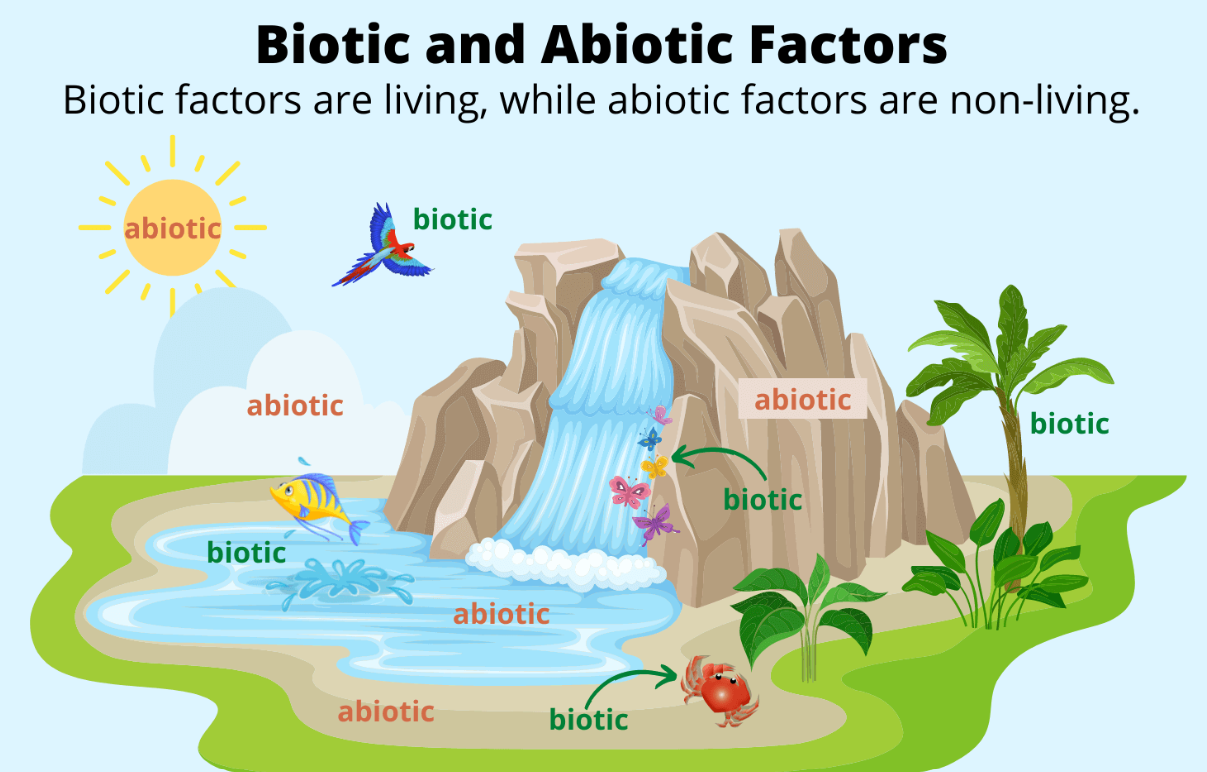
Abiotic and Biotic Factors
Abiotic Factors (Non-living)
- Definition: Physical and chemical components of an environment
- Examples: Temperature, light intensity, water availability, soil type, pH, oxygen concentration, wind, humidity
- CSEC Focus: Know how these factors limit the distribution of organisms
Biotic Factors (Living)
- Definition: Living components that affect other organisms
- Examples: Plants, animals, bacteria, fungi, predators, prey, competitors
- CSEC Focus: Understand interactions like predation, competition, and symbiosis
Drag each factor to the correct category!
Abiotic Factors
Biotic Factors
Abiotic vs biotic factors in an ecosystem
Habitat
Definition: The natural environment where an organism lives. It provides the specific conditions and resources the organism needs to survive.
Key Characteristics
- Provides food, water, shelter, and space
- Has specific abiotic conditions (temperature, light, etc.)
- May change seasonally or due to environmental factors
Examples of Habitats
Forest
Trees, shrubs, rich soil, varying light levels
Pond
Fresh water, aquatic plants, muddy bottom
Desert
Low rainfall, extreme temperatures, sandy soil
Coral Reef
Warm shallow water, calcium carbonate structures
Animal in its natural habitat

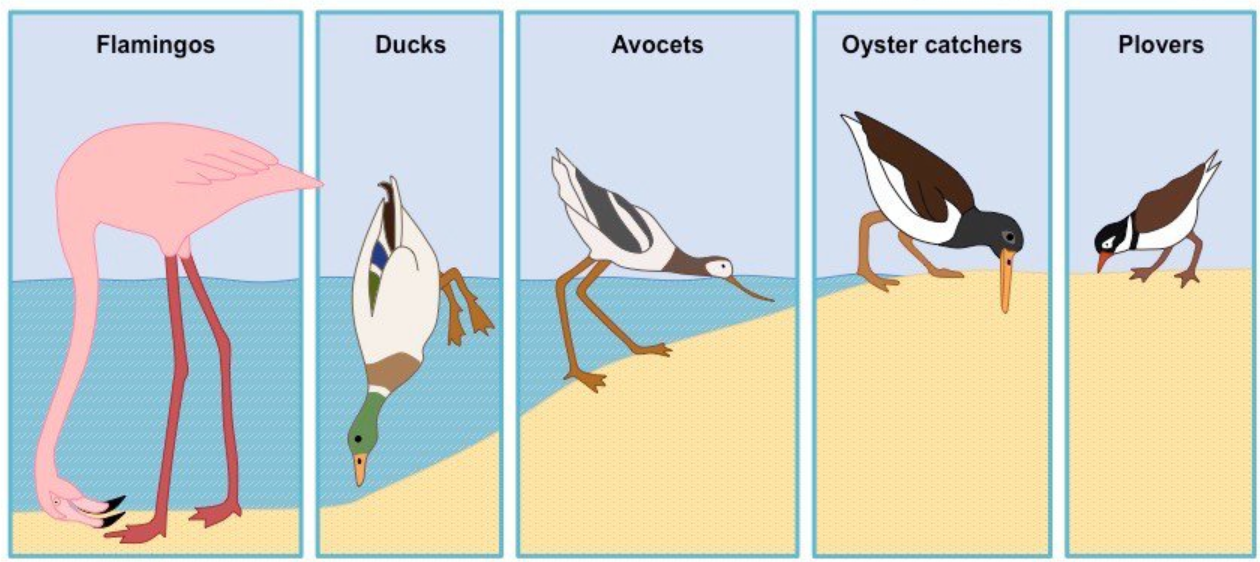
Niche
Definition: The specific role or function of an organism within its habitat. It describes how an organism obtains resources, interacts with other species, and survives.
Niche Components
- Feeding role: Herbivore, carnivore, omnivore, decomposer
- Behavior patterns: Nocturnal/diurnal, migration, nesting
- Interactions: Competition, predation, symbiosis
- Resource use: What it eats, where it finds water, shelter type
Habitat vs. Niche
Habitat = ADDRESS
“Where an organism lives”
Example: A tree in the forest
Niche = OCCUPATION
“What an organism does”
Example: Photosynthesis, providing shelter for birds
Organisms with different niches in same habitat
Species
Definition: A group of similar organisms that can interbreed and produce fertile offspring under natural conditions.
Key Characteristics
- Members share similar physical characteristics
- Can reproduce with each other
- Offspring are fertile (can themselves reproduce)
- Genetically distinct from other groups
Which of these would be considered the SAME species?
Members of the same species

Population
Definition: All the individuals of the same species living in a particular area at the same time.
Population Characteristics
- Size: Total number of individuals
- Density: Number of individuals per unit area
- Distribution: How individuals are spaced (random, uniform, or clumped)
- Growth rate: How quickly the population increases or decreases
Adjust the slider to see how population density changes!
Population of organisms in an area

Community
Definition: All the different populations of organisms living and interacting in a particular area.
Community Interactions
- Competition: Different species competing for the same resources
- Predation: One species hunting and eating another
- Symbiosis: Close, long-term relationships between species
- Mutualism: Both benefit (+,+)
- Commensalism: One benefits, other unaffected (+,0)
- Parasitism: One benefits, other harmed (+,-)
Community of organisms

Ecosystem
Definition: A community of living organisms (biotic factors) interacting with the non-living components (abiotic factors) of their environment as a system.
Ecosystem Components
Energy Flow in Ecosystems
- Producers: Plants that convert sunlight to chemical energy (photosynthesis)
- Consumers: Organisms that eat other organisms
- Primary consumers (herbivores)
- Secondary consumers (carnivores that eat herbivores)
- Tertiary consumers (top carnivores)
- Decomposers: Break down dead matter, recycling nutrients
How Ecological Terms Are Related
Ecological concepts build upon each other in a clear hierarchy:
The Ecological Hierarchy
ECOSYSTEM
All communities + abiotic factors
COMMUNITY
All populations in an area
POPULATION
All individuals of one species
SPECIES
Group of similar organisms
Remember: Each level includes all the levels below it!
Ecological hierarchy diagram

Summary Table
Use this table to review and memorize key ecological terms for your CSEC exam:
| Term | Definition | Example |
|---|---|---|
| Ecology | Study of organisms and their environment | Studying a forest ecosystem |
| Abiotic Factor | Non-living environmental component | Temperature, sunlight, water |
| Biotic Factor | Living environmental component | Plants, animals, bacteria |
| Habitat | Where an organism lives | Pond, forest, coral reef |
| Niche | An organism’s role in its habitat | Pollinator, predator, decomposer |
| Species | Group that can interbreed | Canis lupus (wolf) |
| Population | All individuals of one species in an area | All frogs in a pond |
| Community | All populations in an area | Frogs, fish, plants in a pond |
| Ecosystem | Community + abiotic factors | Pond with water, organisms, sunlight |
CSEC Exam Focus
Common Exam Questions
- Definition questions: “Define the term ‘ecosystem'”
- Comparison questions: “Distinguish between a habitat and a niche”
- Application questions: “Give two examples of abiotic factors in a forest ecosystem”
- Diagram questions: “Label the components of the ecological hierarchy”
Exam Tips
Memorize Definitions
Learn exact definitions for ecology terms
Use Examples
Always support answers with specific examples
Understand Relationships
Know how terms relate to each other
Practice Diagrams
Be able to draw and label ecological diagrams
Sample Structured Question
“Describe the difference between a population and a community. Give an example of each.”
(4 marks)
Model Answer
Population: All individuals of the same species in an area (1 mark). Example: All blue-headed hummingbirds in a forest (1 mark).
Community: All different populations living together in an area (1 mark). Example: Blue-headed hummingbirds, mango trees, and ants in a forest (1 mark).
Interactive Learning Section
Terms
- Habitat
- Niche
- Population
- Community
- Ecosystem
Descriptions
- All the frogs, fish, and plants in a pond
- A pond with water, sunlight, and all living things
- The pond itself where organisms live
- All the frogs in a pond
- The frog’s role as insect predator
Conclusion
Key Takeaways
- Ecology studies interactions between organisms and their environment
- Biotic (living) and abiotic (non-living) factors shape ecosystems
- Ecological terms build hierarchically: Species → Population → Community → Ecosystem
- Understanding these concepts is crucial for conservation and sustainability
Real-World Applications
Ecological knowledge helps us:
Conserve Biodiversity
Protect endangered species and habitats
Manage Resources
Sustainably use water, forests, and fisheries
Address Climate Change
Understand ecosystem responses to change
Restore Ecosystems
Rehabilitate damaged environments
Ready for Your CSEC Exam?
Review these ecology concepts regularly. Practice with past papers and focus on:
- Memorizing key definitions
- Understanding relationships between terms
- Applying concepts to real examples
- Practicing diagram labeling
Good luck with your Biology studies!